
Human Edge Program.
Human Capability Development through Film Pedagogy.
The Human Edge Program (HEP) is LXL Foundation’s flagship initiative — a structured, school-integrated developmental pathway built for India’s government schools, underserved communities, and vulnerable learner ecosystems.
Adapted from the proven School Cinema LifeLab framework, HEP uses cinema, reflection, dialogue, and creative participation to build the emotional, social, behavioural and communication capabilities children need to navigate a rapidly changing world.
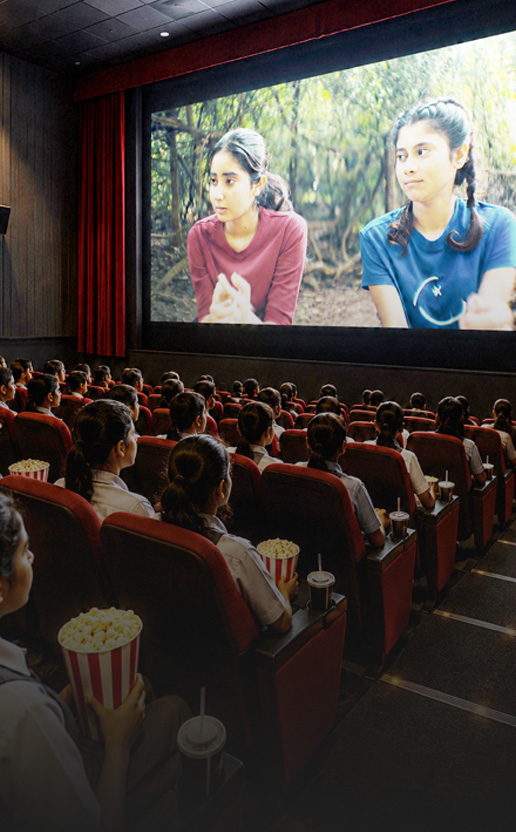
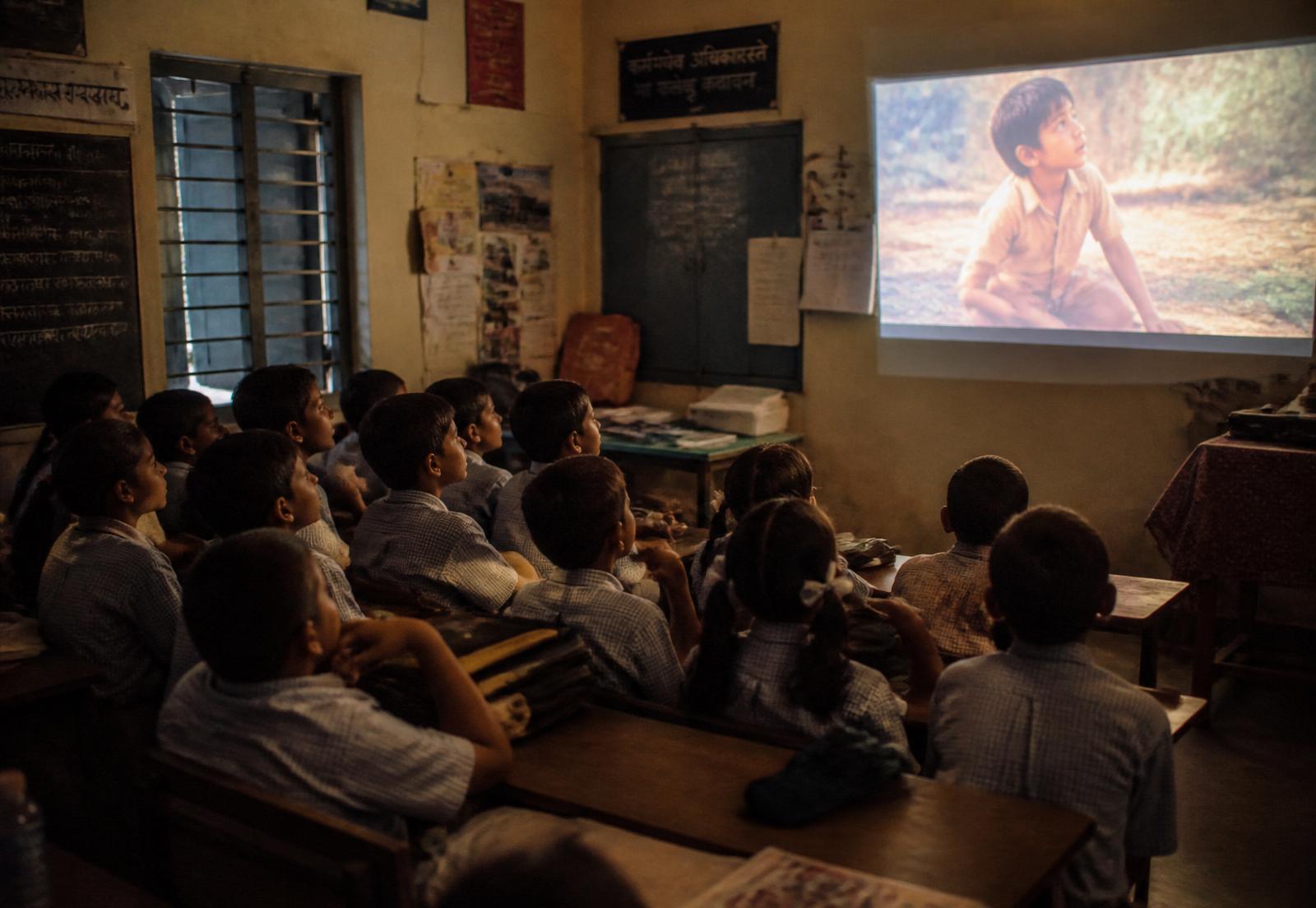
A story they will remember long after the bell rings.
Why HEP exists
Education must prepare children not only academically, but humanly.
India’s education challenge is no longer only about access to schooling. It is about access to meaningful human development. Children are growing up in environments shaped by digital exposure, social media pressures, emotional stress, fragmented attention, misinformation and limited safe spaces for expression.
Government schools are increasingly expected to support emotional wellbeing, communication, empathy, resilience, responsible behaviour, confidence, participation and social awareness. Yet most school systems still lack structured, scalable, implementation-ready Human Capability Development models that operate meaningfully within existing classroom ecosystems.
“HEP was created to address this gap — to build classrooms that don’t only teach what children should know, but support who they are becoming.”
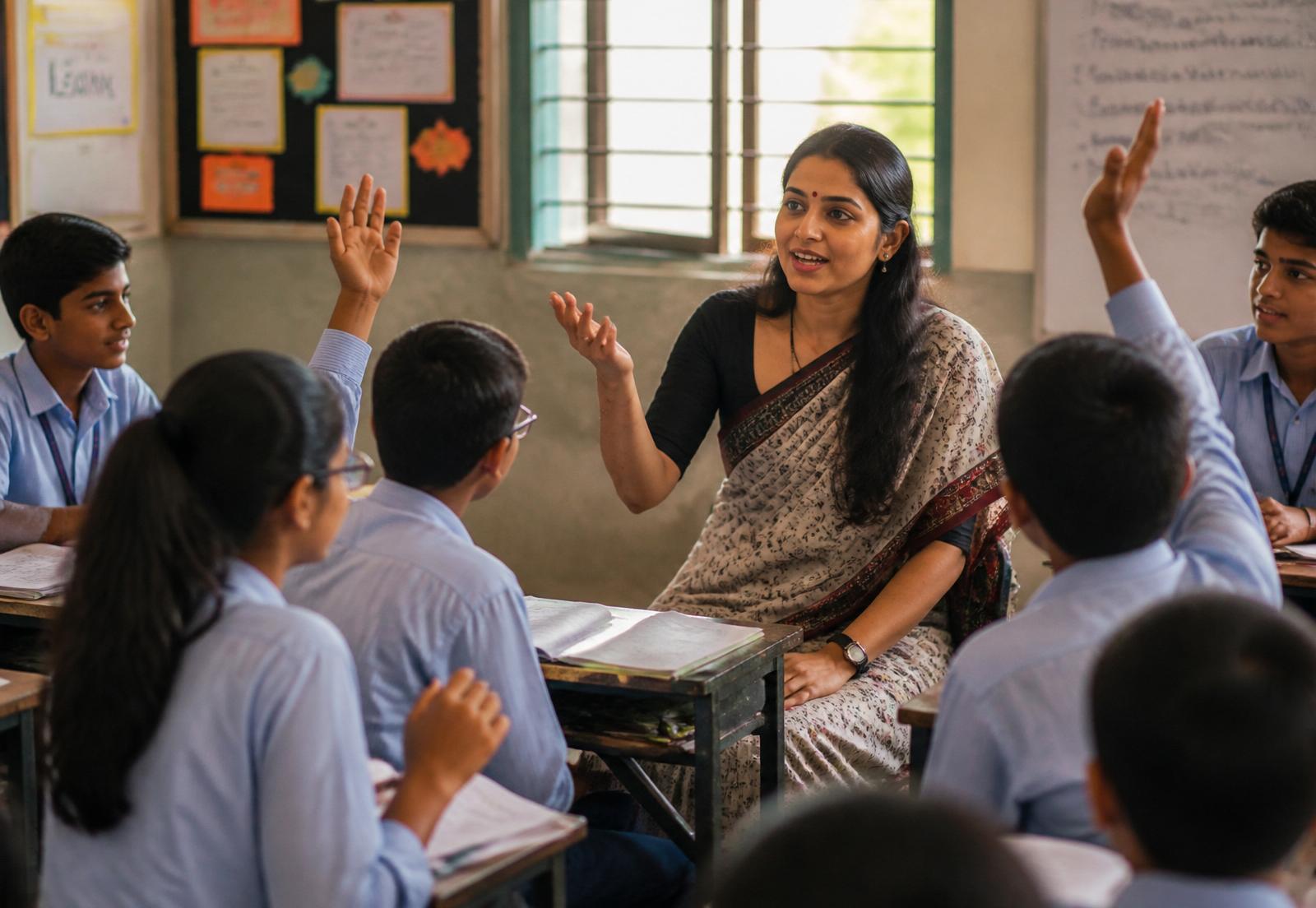
The film opens the room. The teacher opens the mind.
The HEP Approach
Film Pedagogy — cinema as a medium for reflection, dialogue & empathy.
HEP is built on Film Pedagogy — a structured educational methodology that uses cinema not as entertainment, but as a medium for reflection, dialogue, empathy-building, creativity and human understanding.
Children do not simply watch films. They experience, reflect, discuss, express and apply learning to life — through specially created educational films, guided classroom discussions, workbook-based reflection, storytelling and creative participation.
Film Pedagogy is particularly effective inside government and low-resource school ecosystems because it is emotionally engaging, culturally relatable, language-accessible and scalable across diverse learner groups.
Curated, age-appropriate cinema designed for Human Capability Development — not generic content.
Structured classroom reflection that turns watching into questioning, listening and meaning-making.
My Cinema Book activities, storytelling and creative projects that move learning from screen to life.
The 3EX Human Capability Framework
From Awareness to Understanding to meaningful Action.
HEP is built on the LXL Human Capability Framework and the 3EX learning model — a sequenced movement from emotional experience to reflective understanding to expressive action.

Students engage emotionally through curated cinematic experiences — building awareness, emotional connection, curiosity and perspective recognition.

Guided reflection, dialogue and classroom engagement help students develop empathy, communication, reflective thinking and deeper understanding.

Students apply learning through storytelling, participation, creative expression, projects and real-life action — strengthening learner agency, confidence and behavioural understanding.
From passive learning toward meaningful participation, reflection and human-centred growth.
What children develop
Eight human capabilities, built by design.
HEP intentionally strengthens the human capabilities that traditional academic systems struggle to build through instruction alone — developed through repeated cycles of emotional engagement, reflection, dialogue, expression and meaningful action.
Designed for the schools that need it most
Built for government & underserved ecosystems.
HEP is intentionally designed for scalable implementation — low-resource compatible, integrating within existing school timetables and structures without requiring advanced infrastructure or specialised technology.
HEP Structure
Structured cinematic learning, KG to Grade 10.
A year-long developmental pathway integrated into the school timetable. Each grade aligns cinematic experiences with age-appropriate themes — from emotional awareness to digital behaviour and responsible decision-making.
- 10 student films
- 1 parent film
- 1 teacher film
- Grade-specific My Cinema Book workbooks
- Guided classroom activities
- Teacher facilitation support
- Implementation & engagement support







Implementation Model
An implementation-ready ecosystem — three delivery modes.
Schools receive curated films, learning modules, facilitation guides, classroom activities, reflection tools, educator orientation, engagement frameworks and monitoring systems — operated through the model that best fits the partner ecosystem.
Government school teachers facilitate HEP sessions using structured programme resources and implementation frameworks.
LXL Foundation facilitators directly support programme activation, implementation and educator engagement where required.
Delivered through partnerships with CSR organisations, district administrations, philanthropic foundations, educational institutions and ecosystem partners.
At a glance
The programme spec.
How a year unfolds
From onboarding to measured outcomes.
Onboard
Schools, district teams, and CSR partners onboarded with programme design, scope, and learning outcomes.
Orient & Train
Structured facilitation training, teacher films, and implementation orientation build classroom confidence.
Deliver
Grade-wise student films, parent and teacher films, and My Cinema Book workbooks rolled out across the school year.
Reflect & Express
Children apply learning through storytelling, dialogue, creative projects, and real-life action.
Measure
Capability development, delivery quality, and student outcomes measured against the LXL Human Capability Framework.
Institutional strength
Two decades of Film Pedagogy, productionised.
HEP is implemented by LXL Foundation — the social impact arm of LXL Ideas Group, an education innovation ecosystem with nearly two decades of experience in Film Pedagogy, school engagement, educator capacity-building and cinematic learning ecosystems.
Recognised in UNICEF India’s State of the Sector Report as a best practice for scaling 21st-century skills through educational innovation and experiential learning.
National & global alignment
Policy aligned. Classroom ready.
HEP gives governments, CSR organisations and philanthropic foundations a measurable, scalable, implementation-ready Human Capability Development framework — built for India’s government and underserved school ecosystems.
Vision 2030
By 2030, HEP will reach 1 million children — one of India’s largest Film Pedagogy ecosystems for government schools and underserved communities.
Because the future of education is not only about what children know. It is about who they become.